
Updated October 13, 2026 — Two storm events on opposite U.S. coasts are now moving from emergency response into damage documentation and claims.
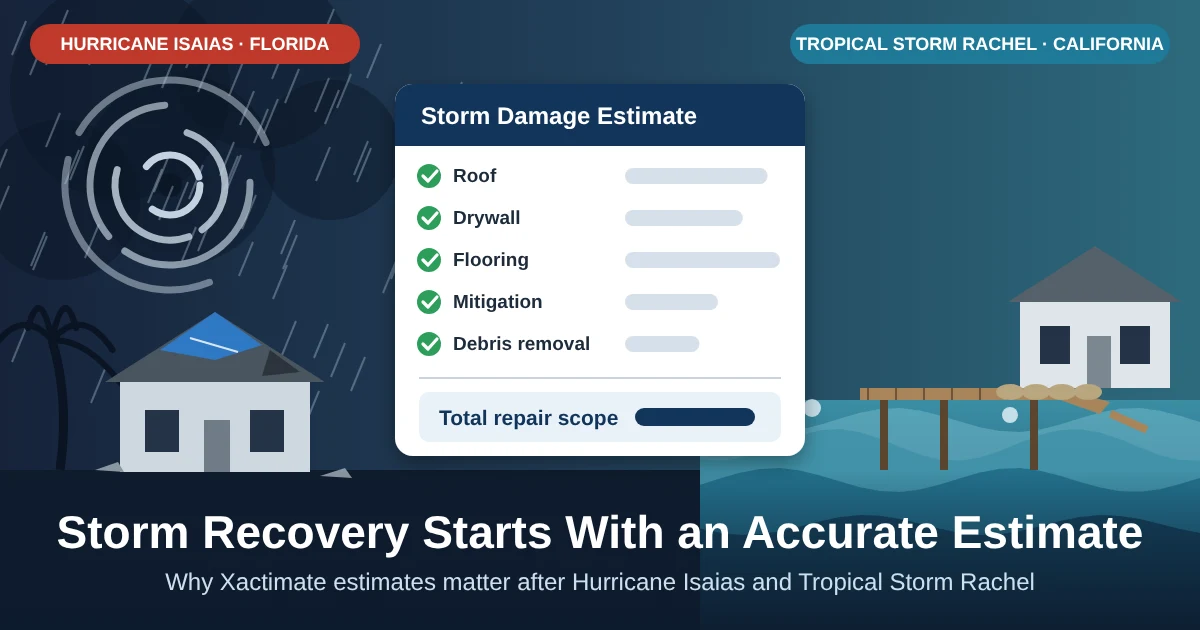
On October 9, Hurricane Isaias made landfall near Destin, Florida, as a Category 2 hurricane with maximum sustained winds of 105 mph, according to the National Hurricane Center. Isaias was the first hurricane of the 2026 Atlantic hurricane season, prompting emergency declarations in parts of Florida and Alabama. Early Saturday, hundreds of thousands of customers across the two states reportedly lost power. By October 10, Isaias had weakened to a post-tropical cyclone as it moved across southern Alabama. Flooding, storm surge, and tornado threats remained concerns across parts of the Southeast.
Meanwhile, swells from Tropical Storm Rachel combined with high tides to cause coastal flooding in Southern California. Newport Beach declared a local emergency after flooding inundated streets on the Balboa Peninsula. In Long Beach, waves damaged the Alamitos Peninsula boardwalk and waterfront homes, and the city red-tagged at least two structures and yellow-tagged three—source: Los Angeles Times.
For homeowners, insurers, and storm restoration contractors, the next step is the same: document damage accurately, prepare detailed repair estimates, and support the insurance review process. Xactimate estimating services can help restoration contractors organize repair scopes and manage estimating workloads during busy recovery periods.
The Role of Xactimate in Hurricane Recovery
Xactimate is property estimating software used by insurance professionals and restoration contractors to prepare repair estimates. It organizes labor, materials, equipment, quantities, and other project costs into a structured format.
After hurricanes and coastal flooding, accurate Xactimate estimates help restoration professionals document the proposed repair scope and communicate the work needed to restore damaged properties.
Three factors make accurate estimating especially important during storm recovery.
1. Claim Volume Strains Local Capacity
After a major storm, contractors and adjusters may need to inspect many properties, document damage, and prepare estimates within tight timelines.
In affected areas, estimating can become a bottleneck when field teams are busy with emergency repairs, inspections, and customer communication.
Professional Xactimate estimating services can help contractors manage larger workloads while their field teams focus on property stabilization and restoration.
2. Wind, Surge, and Flood Damage Require Precise Scoping
Wind, storm surge, and coastal flooding affect properties in different ways.
Wind may damage roofing, siding, windows, and exterior structures. Water intrusion can affect drywall, insulation, flooring, and building systems, while coastal flooding may add contamination and remediation concerns. For properties hit by strong winds, professional wind damage estimates can help document the repair scope and associated costs.
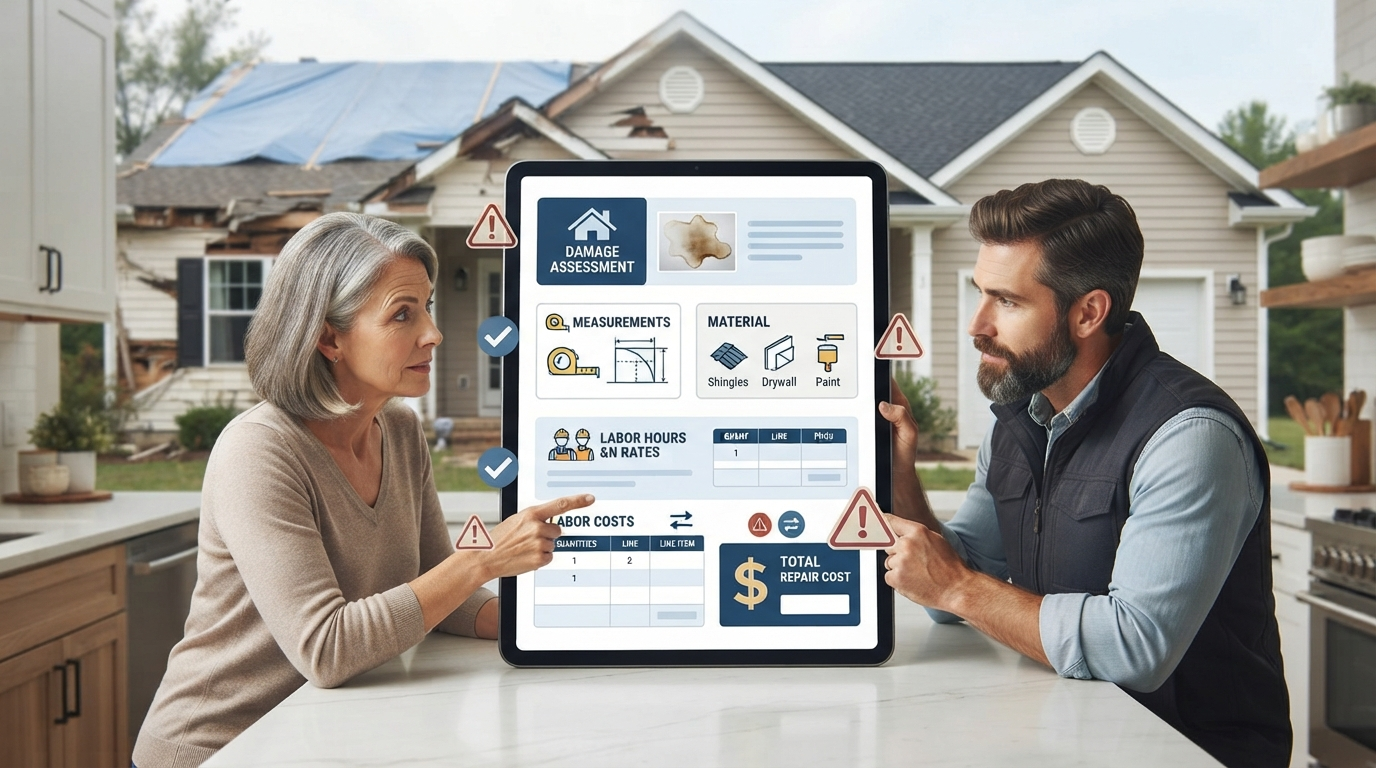
A detailed Xactimate estimate can organize the proposed work through itemized line items, measurements, sketches, and supporting photographs.
The cause of damage and the applicable insurance coverage must still be evaluated using the available evidence and policy terms. A well-prepared estimate supports that review but does not guarantee claim approval.
3. Regional Pricing Accuracy Matters
Repair costs vary between locations because of differences in labor rates, material costs, and market conditions.
A roof replacement in Florida or Alabama may require a different cost assessment from a coastal water-damage restoration project in California.
Xactimate lets estimators use regional price lists. Confirm that the selected price list, quantities, line items, and pricing assumptions fit the property and the estimated date.
After a major storm, professional Xactimate estimating support can help restoration businesses manage estimating workloads and keep documentation consistent across projects.
What to Document First After Storm Damage
When preparing a storm-damage estimate, contractors and property owners should organize the available documentation before beginning the claim review process.
- Date-stamped photos and video of all damage before cleanup or temporary repairs
- Room-by-room measurements and property sketches
- Moisture readings and drying records, where relevant
- Receipts for emergency mitigation, such as tarping and water extraction
- Claim number and adjuster contact details
Benefits of Xactimate Estimating Support for Storm Restoration Contractors
For roofers, water mitigation companies, and general contractors, the weeks after a storm bring a surge in inspections, emergency work, and repair projects.
Professional estimating support can help these businesses manage demand without pulling field teams away from restoration work.
1. Faster Estimate Preparation
Contractors often need to prioritize emergency tarping, water extraction, property stabilization, and customer communication after a storm.
Detailed estimates take time, especially when several projects move forward at once.
Outsourcing Xactimate estimating tasks can add capacity and help contractors focus on field operations.
Turnaround times depend on project complexity, documentation quality, and the estimating provider’s workload.
2. More Consistent Estimate Documentation
A well-organized estimate should include appropriate line items, quantities, measurements, and supporting documentation.
Experienced estimators can help contractors identify missing scope items, correct measurement inconsistencies, and present proposed repairs more clearly.
Consistent documentation supports the review process, but insurers may still request clarification, additional evidence, or revisions before making a coverage decision.
3. Flexible Support During Peak Demand
Storm workloads can spike after a major weather event, making it hard for smaller restoration companies to keep enough estimating capacity.
External Xactimate estimating services can add support when internal teams are handling multiple projects. Contractors can adjust the level of assistance to their workload and project needs.
4. Better Documentation for Claim Review
Large or complex storm-damage claims may require detailed supporting records. Depending on the project, these can include:
- Before-and-after photographs
- Property sketches and measurements
- Itemized repair line items
- Moisture readings and drying records, where relevant
- Material and equipment documentation
- Notes explaining the proposed repair scope
Complete documentation helps reviewers understand the observed damage, the proposed repairs, and the basis of the estimated costs.
5. Multi-State Estimating Expertise
Contractors working across several states must account for regional pricing and project-specific requirements.
Professional estimating partner familiar with different Xactimate price lists can help contractors prepare estimates for properties in different markets, from the Gulf Coast to Southern California.
Each estimate should still reflect the property’s actual condition, applicable pricing, and documented repair requirements.
6. Better Control Over Project Costs
An incomplete estimate can leave contractors with expenses that were not in the original scope.
Overlooked items may include demolition, debris removal, dehumidification equipment, material quantities, or required repairs to affected building components.
A thorough estimate review can identify potential omissions before submission. Any additional work should be supported by site conditions, appropriate documentation, and applicable requirements.
Frequently Asked Questions
Q. How long does an Xactimate estimate take after a hurricane?
Ans: Turnaround depends on the property’s size, the extent of the damage, and the completeness of the submitted information. Clear photographs, measurements, and scope details help estimators work faster. Confirm the expected turnaround with your estimating provider.
Q. How do I file an insurance claim after hurricane damage in Florida?
Ans: Contact your insurer as soon as it is safe to do so. Photograph and document the damage, keep receipts for emergency mitigation expenses, and record your claim number and adjuster’s contact information. Review your policy and follow your insurer’s instructions for inspections and repairs.
Q. Can Xactimate estimates separate wind damage from flood damage?
Ans: An estimate can document different damage types and organize the associated repair scopes. The cause of damage and applicable coverage must still be evaluated using the available evidence and policy terms. An estimate alone does not determine coverage.
Q. Is flood damage covered the same way as wind damage?
Ans: Not always. Policies often treat wind and flood differently, and flood losses may fall under separate coverage. Review your policy and ask your insurer how your loss will be classified.
Q. Do insurance carriers in Florida and California use Xactimate?
Ans: Many insurance professionals and restoration contractors use Xactimate, but requirements vary by insurer and project. Confirm the preferred estimating format with the relevant carrier or claims representative.
The Bottom Line
From hurricane-damaged properties along the Gulf Coast to coastal homes flooded in Southern California, storm recovery depends on accurate damage documentation and a clear view of the repairs each property needs.
Xactimate estimates help restoration contractors organize repair costs, document proposed work, and communicate with stakeholders during claim review.
For contractors managing multiple storm-related projects, professional Xactimate estimating support can add capacity and keep documentation consistent while field teams focus on restoration.
Facing a backlog of storm-damage estimates? Rebuild Estimator provides Xactimate estimating support to help restoration professionals prepare organized, detailed estimates.
Sources:
- National Hurricane Center: Hurricane Isaias landfall report
- Los Angeles Times: Newport Beach flooding and coastal impacts
- Los Angeles Times: Rachel’s coastal impacts and Long Beach damage
- Fox LA: Newport Beach declares local emergency over coastal flooding