

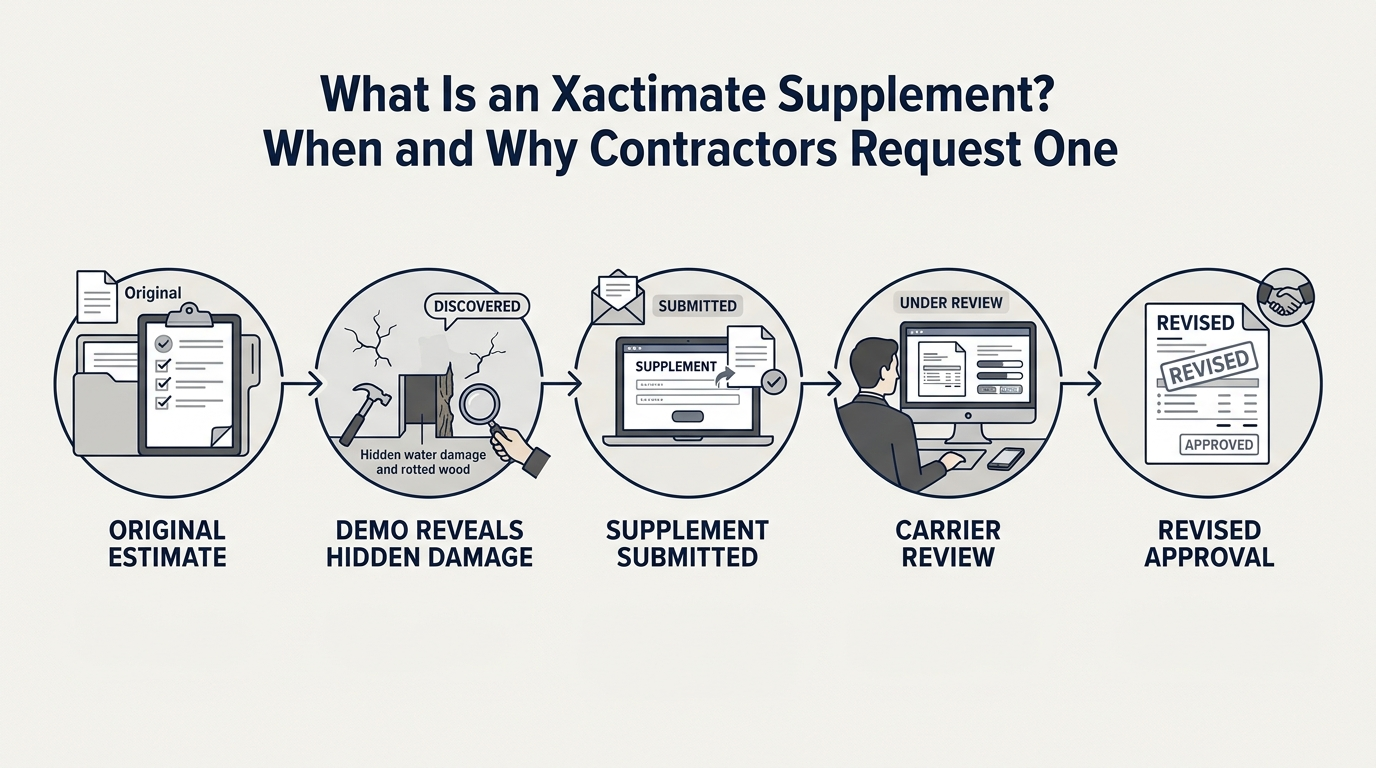
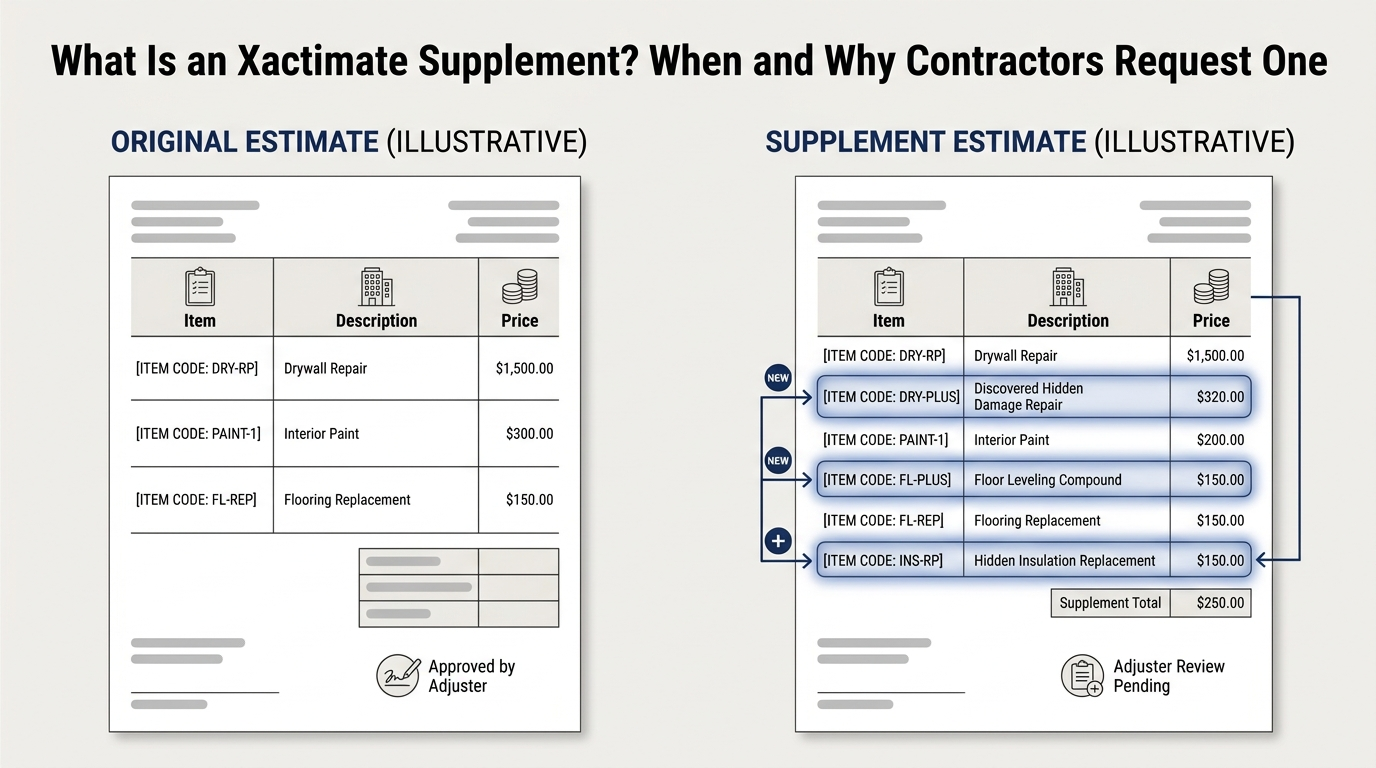
An Xactimate supplement is a revised estimate sent to an insurance carrier to request additional payment for covered damage or work missing from the original estimate. It adds new or corrected line items, backed by photos, invoices, and written explanation.
Supplements are usually triggered by hidden damage found during demolition, a scope change, or missed line items such as overhead and profit. Contractors and public adjusters request them most often, because they are on site or representing the policyholder when the gap appears.
If you’ve wondered what is an Xactimate supplement and whether your claim needs one, this guide covers the triggers, the timing, and what to include for carrier approval.
Why the Original Insurance Estimate May Miss Damage
An insurance supplement is easier to understand when you consider how the original estimate is prepared. Adjusters may assess visible damage before demolition reveals the full scope of repairs
The insurance claim supplement meaning is practical, not adversarial. It’s a documented request that acknowledges damage often reveals itself in layers. Water travels behind drywall, hail bruising hides under shingles, and heat damage can reach framing that looks fine.
An insurance supplement can get denied when the request is hard for the carrier to verify. That’s why the format matters. Xactimate is the pricing platform many carriers use, and a supplemental claim Xactimate file built with the same line-item structure and applicable price lists is easier for an adjuster to review, which can help support carrier approval. Clear line item justification and photo evidence reduce the odds of a denial. See why insurance supplements get denied for the most common reasons.
Supplement vs. Change Order vs. Reopened Claim vs. Appraisal
An Xactimate supplement adds or corrects line items on an open claim with the carrier, while a change order, reopened claim, and appraisal each serve a different purpose, as compared below.
|
Term |
What it is |
Who it goes to |
Typical use |
| Supplement | Added or corrected line items on an existing claim | The carrier | Hidden damage, missed items, pricing gaps |
| Change order | Contract change between contractor and homeowner | The homeowner | Upgrades or work the owner requests |
| Reopened claim | A closed claim brought back for review | The carrier | New damage found after closure |
| Appraisal | A formal process to resolve a dispute over the amount of loss | Appraisers or an umpire | Disagreements the carrier won’t resolve |
Policy terms and state rules determine which path applies, so check both before choosing.
Common Triggers for a Supplement
1. Hidden Damage Found During Demolition
This is a common trigger. Tear-out often reveals:
- Mold behind walls that looked dry
- Saturated insulation or subfloor under surface water damage
- Rot concealed by finished materials
- Electrical or plumbing components damaged by fire or water
- Materials that need testing or abatement before rebuilding
Photos, moisture readings, and notes turn hidden damage into evidence.
2. Scope Change and Code Requirements
A scope change happens when the actual repair differs from what was approved. Some repairs must meet current local code, and whether the carrier pays for upgrades depends on the policy, including any ordinance or law coverage, and the circumstances of the loss.
Examples include:
- Ice and water shield on roof replacements
- Updated electrical protection such as GFCI
- Energy-code-compliant windows and insulation
If a homeowner chooses an upgrade beyond like kind and quality, they typically pay the difference. A supplement can still document that scope change clearly.
3. Missed Line Items and Pricing Errors
Common omissions include:
- Overhead and profit (O&P) when a general contractor is needed
- Waste factors on steep or complex roofs
- Drying equipment such as dehumidifiers and air movers
- Debris haul-off and dump fees
- Permits
- Local labor or material pricing that doesn’t match your market
Who Requests a Supplement?
- General and roofing contractors are on-site when damage appears and carry the financial risk if funding falls short.
- Public adjusters represent the policyholder and pursue omitted or underpriced items.
- Restoration and mitigation companies supplement when drying, remediation, or contents work exceeds the original scope.
- Homeowners can file, but line items and pricing databases can make the process challenging, so many work with a professional.
A Simple Example
Suppose an insurance carrier approves a $48,000 estimate for a water-damaged kitchen. During demolition, the contractor discovers wet subflooring and insulation that were not included in the original estimate. The drying process also requires more equipment days than initially planned.
The contractor documents the additional work with photos, moisture readings, and equipment logs. If the revised, documented estimate totals $60,000, the contractor submits a supplement requesting the $12,000 difference, with a written explanation supporting each added line item.
Note: These figures are hypothetical and provided for illustration only. Actual supplement amounts depend on the documented damage, applicable policy coverage, estimating methodology, and local pricing.
When to File a Supplement
When to file a supplement has one answer: as soon as the evidence exists, while claim and policy deadlines still allow it.
In practice:
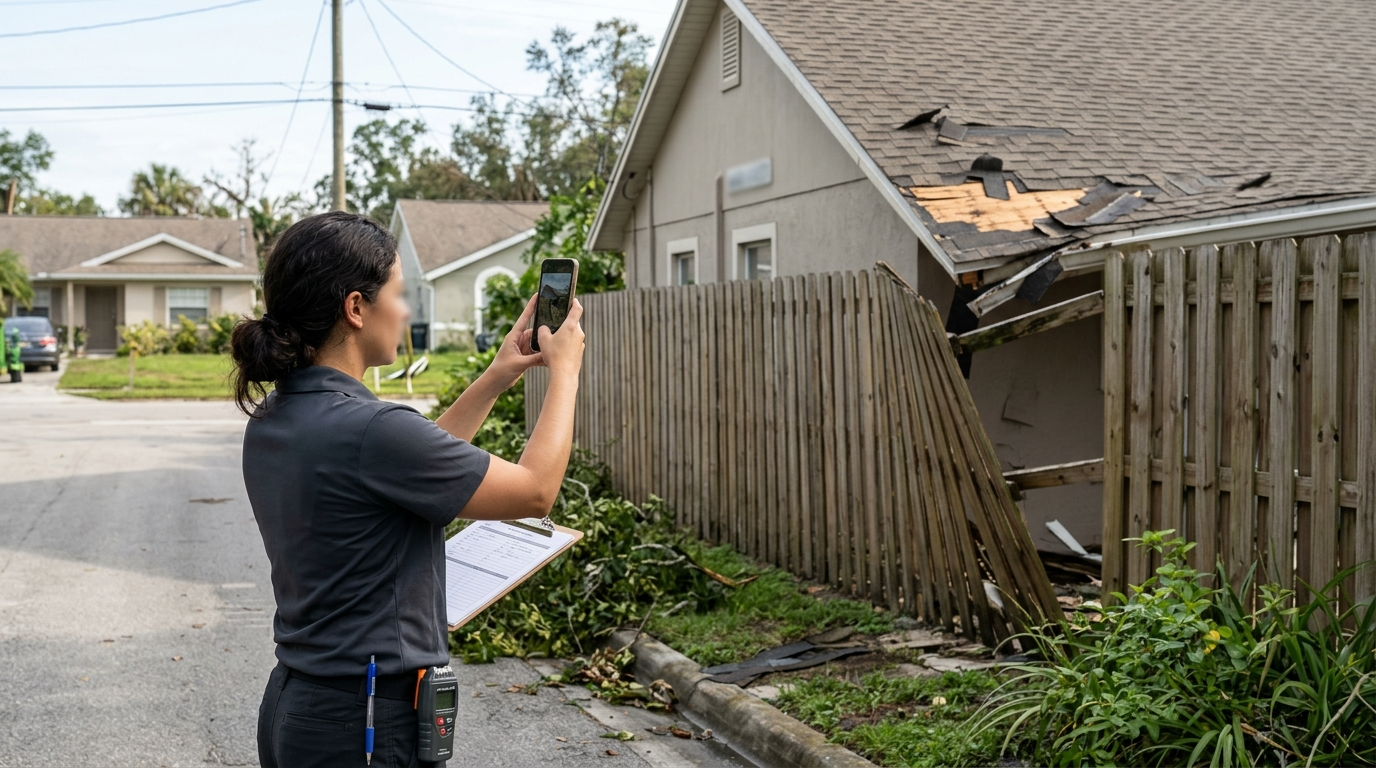
- Document during demolition. Photograph hidden damage before anything is covered back up.
- Record measurements. Include dates, dimensions, and moisture readings.
- Build the revised estimate. Add only the new or corrected line items.
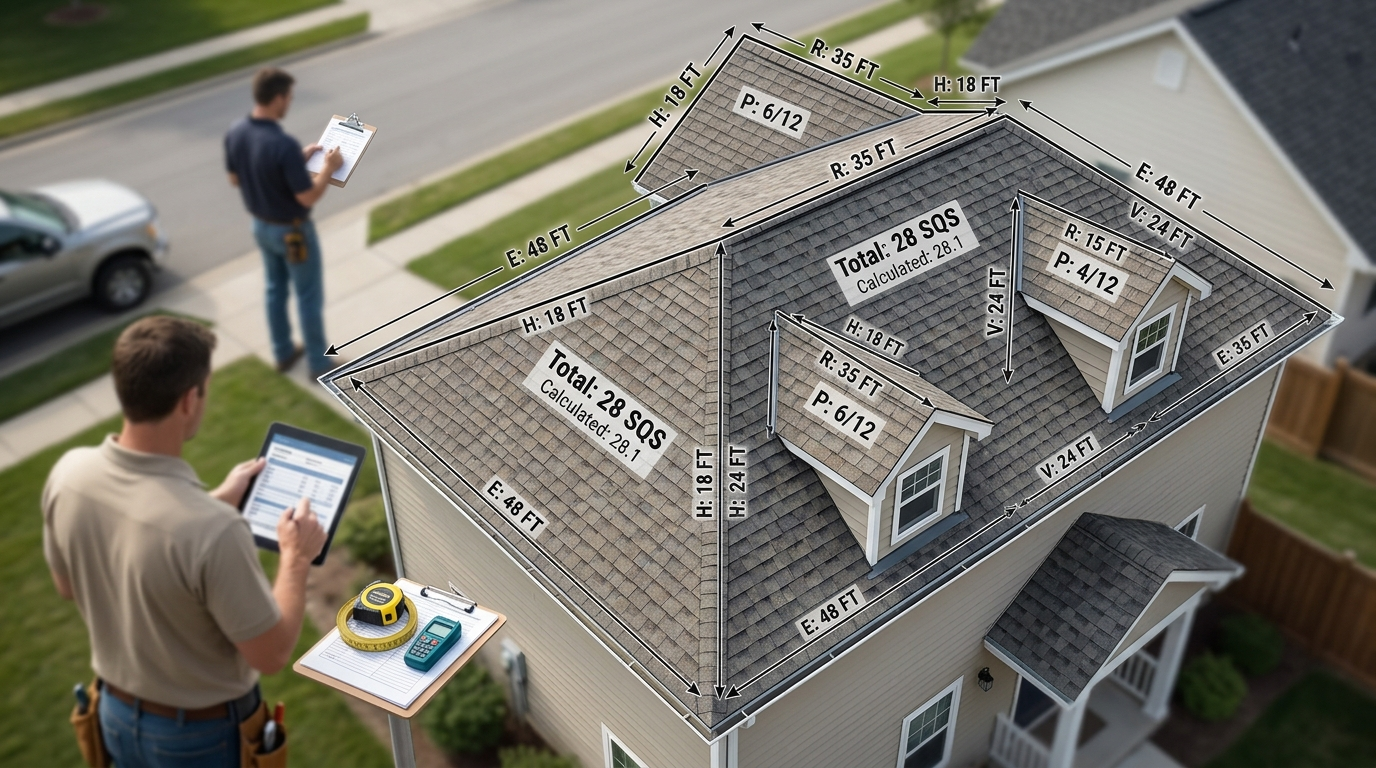
- Submit before your final invoice. Follow the carrier’s submission process.
- Watch deadlines. Time limits vary by policy and state, so confirm them for your claim.
Waiting until the job is finished is a common mistake. The walls may be closed, the evidence may be harder to verify, and the carrier has less information to review.
What to Include in a Supplemental Claim Xactimate File
A strong supplement answers three questions before the adjuster asks: What changed? Why wasn’t it in the original estimate? What does it cost?
- Revised Xactimate estimate: Include new or corrected line items priced using the applicable local price list.
- Photos: Provide dates, measurements, and moisture readings where relevant.
- Line item justification: Explain each addition, citing policy language or a code provision where applicable.
- Invoices and receipts: Include records for completed emergency work or materials already purchased.
- RCV explanation: RCV (replacement cost value) is the cost to repair or replace with like kind and quality, subject to policy terms and limits. Explain how the requested amounts relate to the policy’s settlement terms, including depreciation.
Clear line item justification helps an adjuster verify the request and evaluate whether the additional items are covered.
Don’t have time to build it? Our Xactimate supplement services team prepares carrier-ready supplements from your photos, invoices, and scope notes.
How to Write the Supplement
The mechanics matter as much as the evidence. Line items need the right trade categories, pricing needs to match the carrier’s geographic profile, and the narrative should lead the adjuster to the conclusion.
For the full process, see our guide on how to write an Xactimate supplement.
Why Carriers Deny Supplements
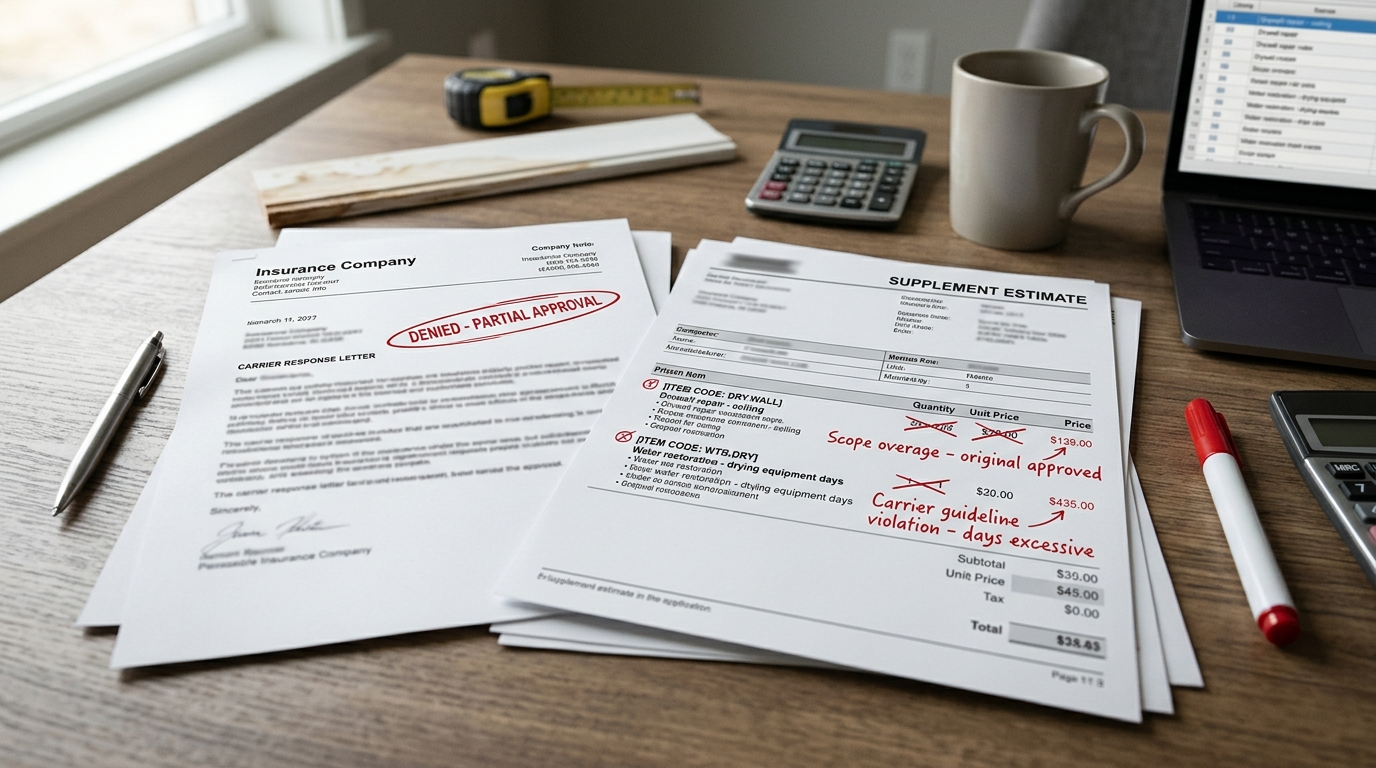
Common reasons include missing photos, items that duplicate existing coverage, pricing the carrier considers unsupported, and late submissions that are difficult to verify.
We cover the most common reasons and how to address them in why insurance supplements get denied.
Conclusion
So, what is an Xactimate supplement? It’s the professional, documented process of asking an insurer to revise an estimate so the proposed payment reflects the supported cost of covered repairs. It addresses an under-scoped claim when hidden damage, a scope change, or missed line items show that the original estimate doesn’t tell the full story.
Contractors who treat supplements as a normal phase of a claim can manage project costs and homeowner expectations more effectively. Know when to file a supplement, prepare your line item justification before the walls close, and document everything as the damage is exposed.
Need a carrier-ready supplement written from your photos, invoices, and scope notes? Send your claim documents to Rebuild Estimator for a review and quote.
Frequently Asked Questions
What is an Xactimate supplement?
An Xactimate supplement is a revised estimate sent to an insurance carrier to request additional payment for covered damage or work missing from the original estimate. It includes new or corrected line items, photos, and a written explanation for each change.
How long does an Xactimate supplement take to get approved?
Approval time varies by carrier, claim size, and documentation quality. A supplement with clear photos, measurements, and line item justification is usually easier for an adjuster to review. Ask the carrier about its review timeline when you submit.
Can a homeowner file an Xactimate supplement?
Yes, a policyholder can request a supplement on their own claim. Because it involves line items, local price lists, and depreciation, many homeowners work with a contractor, public adjuster, or estimating company to prepare it.
Does insurance have to pay a supplement?
Not automatically. The carrier reviews each supplement against the policy terms and the supporting evidence. Documented damage that is covered and was not reasonably discoverable earlier may support approval, subject to policy limits and conditions.
What is the difference between a supplement and a change order?
A supplement goes to the insurance carrier to request additional claim funds. A change order is an agreement between the contractor and homeowner to change the work or contract price, such as an upgrade the owner requests.
Why would an insurance supplement be denied?
Carriers can deny or reduce a supplement for missing photos, unsupported pricing, duplicate line items, or late filing. Dated photos, measurements, and a clear explanation for each added item help address these concerns.
When should I file an Xactimate supplement?
File as soon as you have evidence of additional damage or missing items, ideally during demolition and before final invoicing. Deadlines vary by policy and state, so confirm the time limits for your claim.